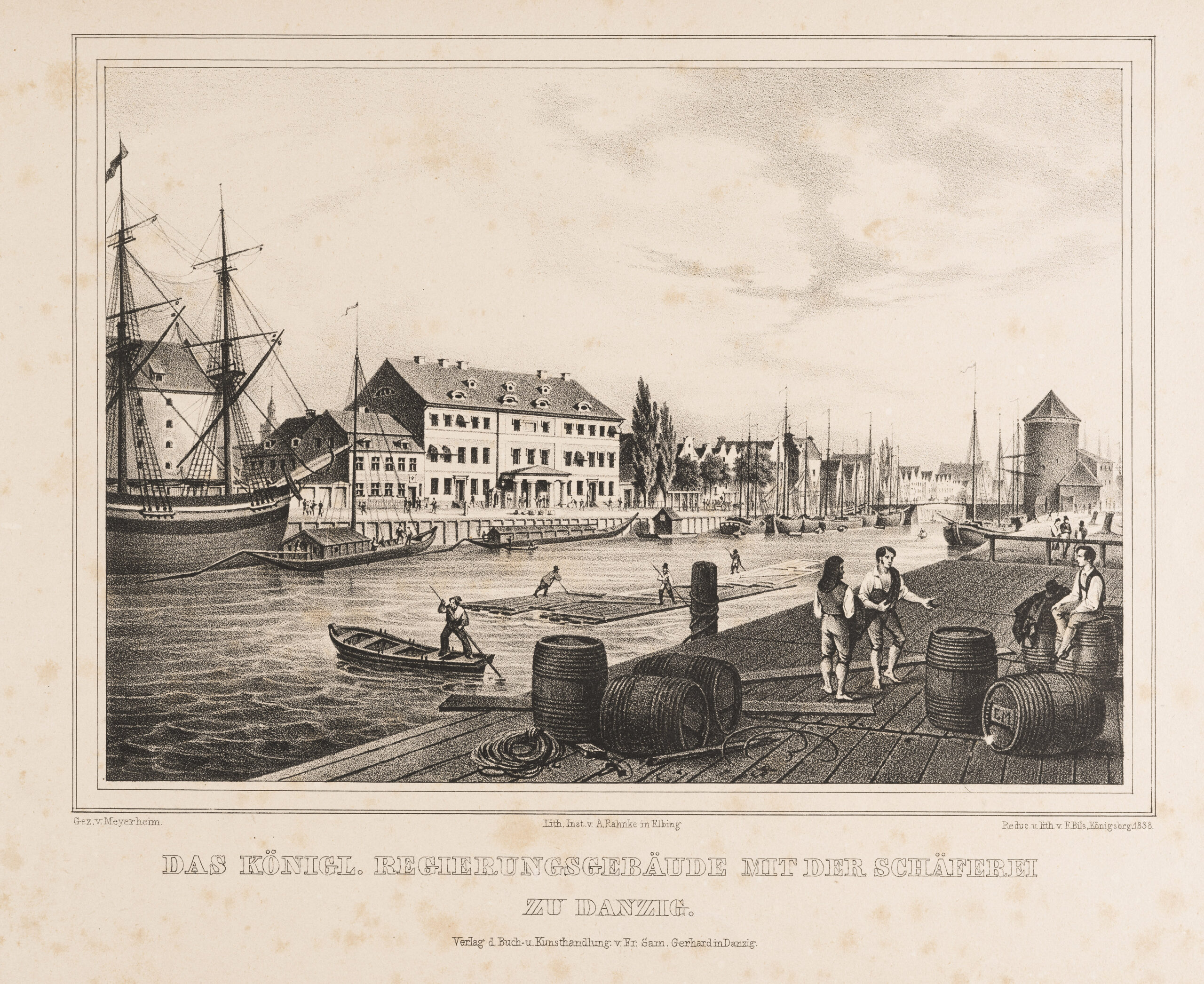
Beer and brewing tradition in Gdansk is at least 700 years history. The earliest records of brewers’ activities in Gdańsk date back to 1342 when a brewers’ guild was established in the Old Town. A 1416 census listed the names of 376 people involved in brewing sector.
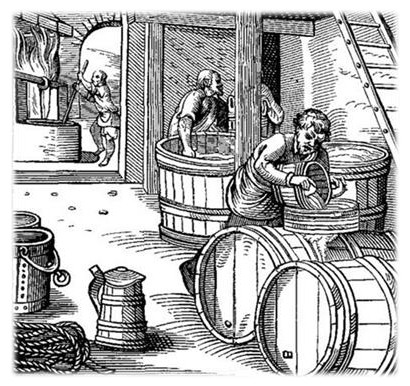
In the 16th century, production amounted to approximately 200,000 barrels per year (and thus over 25 million liters). Gdańsk beer—especially its premium varieties—enjoyed a reputation that extended beyond the local market. It was in high demand in Western and Northern Europe, as well as in the Polish-Lithuanian Commonwealth
Don’t forget and book a beer tasting tour in Gdansk!
Beer and brewing tradition in Gdansk. In the Middle Ages and early modern period, most brewers operated in the central part Old Town: on Ogarna Street (until 1378, this street was even called Brauergasse—Brewer’s Street), Szeroka Street, Chlebnicka Street, and Św. Ducha Street. Starting in the 16th century, breweries began to appear on a larger scale in the Old Town (mainly on Korzenna and Stolarska Streets) and in the suburbs as well. By the mid-18th century, there were a total of 20 large breweries operating in Gdańsk.
Beer in Gdansk. The most popular types of beer in period of 16th-18th century
- Tafelbier, was the most commonly consumed beer in old Gdańsk, a dark beer available at a moderate price, which was also exported on a massive scale.
- Bitterbier, spiced beer, a medium-strength beer brewed with the addition of herbs and spices.
- Krolling, a low-quality beer consumed by poor townspeople, produced by re-brewing the spent grain previously used to produce other types of beer;
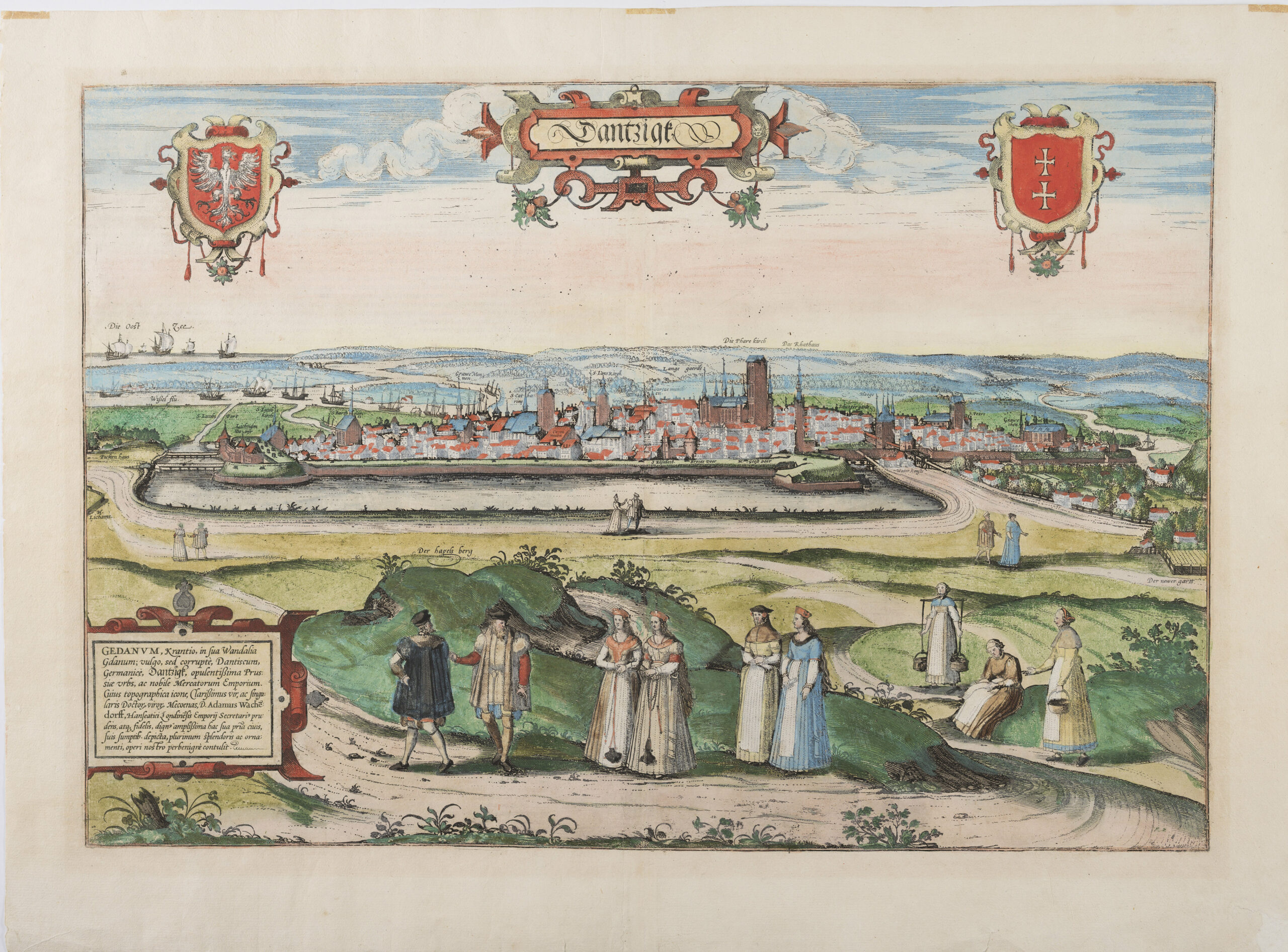
Frans Hogenberg, View of Gdansk, 1572
Similar census from 1551 listed the names of 146 brewers. The decline in the number of producers was linked to the consolidation of breweries. Wealthier individuals typically owned more than one brewery. For example, the Hewelke family, who settled in the Old Town (and from whom the Gdańsk astronomer—and also brewer—Jan Hevelius descended), owned as many as 12 breweries in 1580.
The industry’s magnates were more like entrepreneurs organizing beer production than mere craftsmen. Poorer brewers leased breweries from wealthier members of the guild. Gdańsk’s breweries brewed beer only 2–3 times a week.
Types of cheep beer produced in Gdansk
- “ship’s beer” (Schiffsbier)—a beer of average quality, popular among sailors and dockworkers due to its low price, and also taken aboard merchant ships in place of drinking water (it was likely heavily hopped, which prevented premature souring);
- “Krolling”—a low-quality beer consumed by poor townspeople, produced by re-brewing the spent grain previously used to make other types of beer;
- “Groschenbier” (penny beer)—a very cheap, poor-quality beer consumed mainly by the urban poor (its production was banned in 1621).
In the 16th century, several thousand barrels of beer were exported from Gdańsk each year. The scale of these exports and the importance of the beer trade to Gdańsk’s economy led to the creation of a separate group of licensed dockworkers, known as beer porters (Bierträger), who were exclusively responsible for loading barrels of beer onto ships.